Faye Dunaway
The Iconic Actress Who Defined a Golden Era of Hollywood
Faye Dunaway is one of the most celebrated actresses in the history of American cinema.
Known for her intelligence, elegance and powerful screen presence, Dunaway became one of the defining performers of the 1960s and 1970s — an era when Hollywood was undergoing a dramatic transformation.
From fearless criminals to complex, ambitious women, Dunaway created characters that were unforgettable.
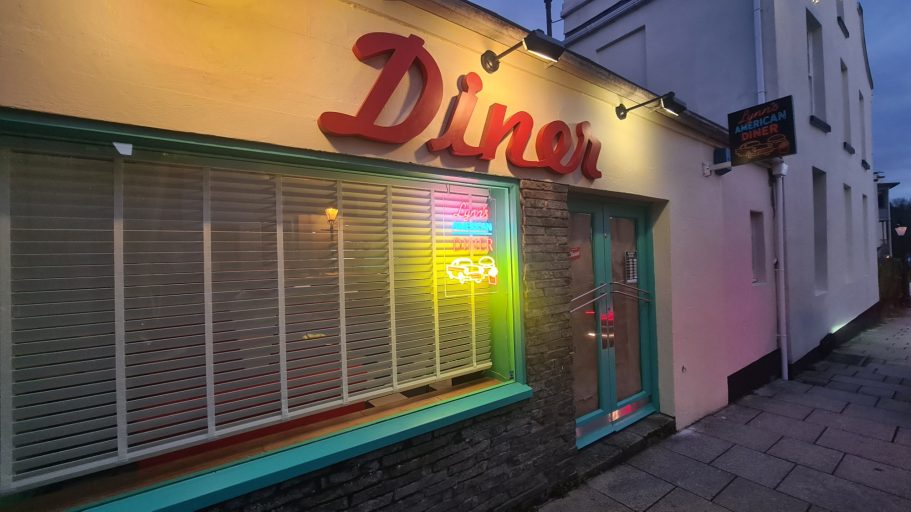
At Lynn’s American Diner, Faye Dunaway represents a golden period of American film:
Style.
Talent.
Strong characters.
And stories that changed cinema forever.
Quick Facts
Born: January 14, 1941
Birthplace: Bascom, Florida, USA
Profession: Actress
Career Began: 1962
Academy Awards:
🏆 Best Actress – Network (1976)
Known For:
Bonnie and Clyde (1967)
The Thomas Crown Affair (1968)
Chinatown (1974)
Network (1976)
The Three Musketeers (1973)
Early Career
Faye Dunaway began her career in theatre before moving into film.
Her classical training helped her develop a reputation as an actress capable of bringing intelligence and complexity to her roles.
She arrived in Hollywood during a period of enormous change.
The traditional studio system was beginning to disappear, making way for a new generation of filmmakers and actors.
Bonnie and Clyde (1967)
The Film That Changed Hollywood
Dunaway became a major star with Bonnie and Clyde, playing Bonnie Parker opposite Warren Beatty.
The film challenged traditional Hollywood conventions with its mixture of:
Crime
Romance
Violence
Humour
Anti-hero characters
It became one of the key films that helped begin the New Hollywood era.
The film influenced the generation of filmmakers who would later create:
The Godfather
Jaws
Taxi Driver
American Graffiti
The Thomas Crown Affair (1968)
Style, Sophistication and 1960s Cool
Dunaway starred opposite Steve McQueen in The Thomas Crown Affair.
The film became famous for its:
Fashion
Cinematography
Music
Sophisticated atmosphere
It showcased Dunaway's ability to combine intelligence and elegance on screen.
Chinatown (1974)
One of Cinema’s Greatest Performances
Faye Dunaway delivered one of her most acclaimed performances as Evelyn Mulwray in Roman Polanski's Chinatown.
Working alongside:
Jack Nicholson as Jake Gittes
John Huston as Noah Cross
Dunaway created a character filled with mystery, vulnerability and emotional depth.
The film remains one of the greatest examples of 1970s American filmmaking.
Related Archive Pages:
Chinatown
Jack Nicholson
Robert Evans
Robert Evans and Chinatown
Producer Robert Evans played a crucial role in bringing Chinatown to the screen.
The film represents the kind of ambitious, character-driven filmmaking that defined his era at Hollywood studios.
It connects beautifully with Lynn’s American Diner archive because it represents a time when filmmakers took risks and created lasting cultural landmarks.
Network (1976)
The Performance That Won Her an Oscar
Dunaway played Diana Christensen in Network, a ruthless and ambitious television executive.
Her performance earned her:
🏆 Academy Award for Best Actress
The film remains famous for its sharp commentary on media, ambition and modern society.
Faye Dunaway and the New Hollywood Era
The 1970s produced some of the most influential films in American history.
Dunaway was at the centre of this movement alongside:
Jack Nicholson
Robert De Niro
Al Pacino
Gene Hackman
This era valued:
Complex characters
Realistic stories
Bold filmmaking
The Faye Dunaway Style
Dunaway became known for a unique combination of:
Intelligence
Elegance
Confidence
Strength
Her characters were rarely simple.
They were ambitious, complicated and unforgettable.
A Connection to Lynn’s American Diner
Classic diners are filled with characters.
The people who walk through the door become part of the story.
Faye Dunaway represents that same idea:
A memorable face.
A powerful personality.
A story people remember.
Cultural Impact
Faye Dunaway helped redefine the image of women in American cinema.
Her characters were not simply supporting figures.
They were central to the story.
She became one of the actresses who helped bring greater complexity and depth to female roles in Hollywood.
Why We Love Faye Dunaway
Some actors become famous.
Others become symbols of an era.
Faye Dunaway became a symbol of a remarkable period when American cinema reinvented itself.
Faye Dunaway at Lynn’s American Diner
Faye Dunaway belongs in the Lynn’s American Diner Film History Archive because she represents:
🎬 Classic American Cinema
⭐ Powerful performances
🇺🇸 Hollywood history
✨ Timeless style
Related Archive Pages
Chinatown (1974)
Jack Nicholson
Robert Evans
Bonnie and Clyde (1967)
Warren Beatty
Network (1976)
The Thomas Crown Affair (1968)
New Hollywood Cinema
The Godfather (1972)
Jaws (1975)
American Graffiti (1973)
Did You Know?
Faye Dunaway won the Academy Award for Best Actress for Network.
Bonnie and Clyde was considered controversial when released but became a landmark film.
Chinatown is frequently ranked among the greatest films ever made.
Dunaway worked with some of the most influential filmmakers and actors of the 20th century.
Her career helped define the transition from classic Hollywood to modern American cinema.
Lynn’s American Diner Rating
⭐⭐⭐⭐⭐ 10/10
Why It’s On Our Wall
The greatest eras of cinema are defined by the people who shaped them.
Faye Dunaway was one of those people.
Her performances captured a changing America and helped create some of the most memorable films in history.
That is why Faye Dunaway earns her place in the Lynn’s American Diner Film History Archive.
"Great performances do not disappear. They become part of the story of cinema itself."
The Lynn’s American Diner Film History Archive celebrates the films, people and stories that continue to define the rich history of American culture.